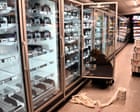
Freezer Cyberattack Strikes European Supermarkets Again
Suspected cyber-attacks raised freezer temperatures to 50C (122F) overnight at supermarket chains in Sweden, Belgium and Luxembourg, including six Coop stores in Sweden. This follows a similar attack on French stores that caused millions of euros in food losses.
A second wave of cyber-attacks has struck supermarket refrigeration systems across at least seven European countries, raising freezer temperatures to 50°C (122°F) and causing millions of euros in food losses. The attacks follow a similar incident in France in early October that hit hundreds of stores, highlighting persistent vulnerabilities in internet-connected cooling units that require physical modifications to secure.
-
Scale and geographic spread of the attack
The attack affected dozens of supermarkets across Belgium, Luxembourg, Sweden, Ireland, the Netherlands, Estonia, and Finland. Around 40 Delhaize stores in Belgium and Luxembourg were hit, while Sweden saw six Coop stores and a small number of ICA shops affected. In Ireland, 13 SuperValu supermarkets were impacted, and in the Netherlands, at least 17 companies—including butcher shops and small stores—reported problems. An Ikea store in Mons, Belgium, also had its refrigeration systems compromised. [1] [2] [3]
-
Technical method and vulnerability exploited
Sabcobel CEO Stephan Moelans stated that the attackers switched the units' evaporators to defrost mode, the same method used in the October French attack. He noted that the company had been working to protect customers' fridges since the French incident, but the units required physical modifications—not just software updates—to fix the vulnerability. Patrick Lamplmair of Tributech added that thousands of controllers remained reachable from the internet after the French attack, making them easy targets. [1] [2] [3]
-
Financial impact on individual stores
A Delhaize branch in Hoeilaart, Flanders, reported losing €100,000 (£83,500) worth of produce, with the manager noting that estimate did not include further losses from store closure. In the French attack in October, millions of euros worth of food had to be thrown away across hundreds of supermarkets. The repeated incidents have drawn concern from EU food and agriculture commissioner Christophe Hansen, who called them a deliberate attempt to disrupt the food supply chain. [1] [2] [3]
-
Response from cybersecurity authorities and industry
Belgium's and Sweden's national cyber-security agencies said they were monitoring the incident, while the UK's National Cyber Security Centre said it was working with international partners to understand the details. In the US, authorities are investigating refrigeration malfunctions at American military bases in August and collaborating with French officials to examine possible links. Tom Hegel of SentinelOne noted that the lack of financial demands in these attacks points to sabotage rather than extortion. [1] [2] [3]
-
Affected retailers and their operational responses
Carrefour Belgium reported disruption in about 15 of its 700 shops, while Colruyt Group said five Spar stores were hit. ICA confirmed a small number of its stores operating outside its central network were affected, and one ICA branch in Sjöbo, Sweden, posted on social media that its freezers had been hacked and set to 50°C. In Estonia, Kitman Coldtech CEO Jann Mutso said attackers accessed a computer controlling the refrigeration system and turned up the temperature, but the attack was responded to within minutes with no significant damage. [1] [2] [3]