Solar and Space: Data Center Power Shifts: A Crusoe investor
A Crusoe investor advocates solar and battery storage for AI data centers, while the FCC approves SpaceX's orbital data center plan. Military attacks on terrestrial data centers continue, per Ars Technica.
The FCC has conditionally approved SpaceX's plan to deploy up to 1 million satellites for orbital AI data centers, while a key investor in data center firm Crusoe argues that solar and battery storage—not natural gas—are the fastest path to powering the next generation of AI facilities. These developments come as military attacks on terrestrial data centers in the Middle East and Ukraine have become a persistent threat, reshaping how hyperscalers and governments think about infrastructure resilience.
-
Solar and storage as a faster alternative to gas
Brook Porter, partner at G2 Venture Partners (G2VP) and lead investor in Crusoe's Series C, argues that solar paired with long-duration energy storage can outpace natural gas for powering AI data centers. He notes that global natural gas capacity is only about 60–70 GW per year, while solar already exceeds 1 TW annually, and that modular manufacturing (Wright's Law) makes solar and storage cheaper and faster to scale. G2VP estimates total data center investment will top $4 trillion by the end of the decade. [1]
-
Off-grid data centers could bypass permitting bottlenecks
Porter advocates building large data centers off-grid, powered entirely by renewables and storage, to avoid grid interconnection delays and air permits. He says this approach can 'dramatically' accelerate time to market. G2VP portfolio company Antora Energy and Form Energy are developing long-duration storage products that have already lowered per-MWh costs, though they may be years from broad adoption by data center developers. [1]
-
FCC approval for SpaceX's Starmind constellation faces opposition
The FCC granted conditional approval for SpaceX to deploy up to 1 million satellites for orbital data centers, despite objections from Amazon, Viasat, and the American Astronomical Society over orbital debris, radio interference, and environmental harm. Amazon called the application a 'lofty ambition rather than a real plan' that 'risks real harm.' FCC Chair Brendan Carr said the decision 'opens a bold new frontier for computing infrastructure.' [3]
-
SpaceX must overcome technical and regulatory hurdles before launch
SpaceX has seven years to get its first operational Starmind satellite into orbit and 14 years to deploy the full constellation. The company still needs FCC approval for its orbital debris plan, as it requested a waiver from the rule requiring satellites below 2,000 km to reenter within five years. SpaceX proposes moving retired satellites to other Earth orbits or even solar orbit. The satellites would operate at altitudes of 500–1,002 km and use laser links to communicate with Starlink. [3]
-
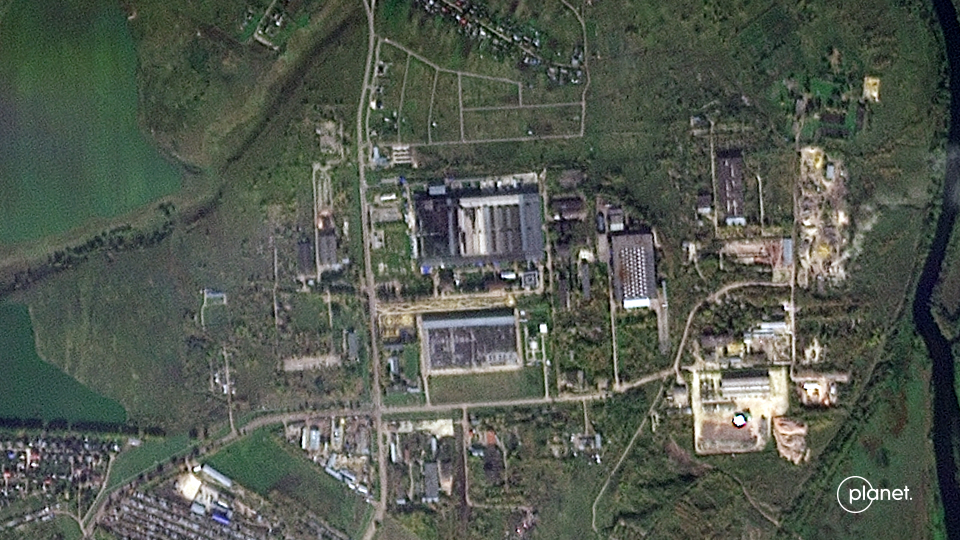
Military attacks on data centers are a growing and cost-effective tactic
Joseph Jarnecki of the Royal United Services Institute explained that militaries target data centers because of their 'dual use'—civilian cloud infrastructure is used by militaries for battlefield management and HR, making it a legitimate military target under international law. He noted that cheap kamikaze drones can impose economic costs at a ratio of at least 100:1 relative to the damage inflicted. Ukraine anticipated this threat and conducted a large-scale cloud migration at the start of Russia's full-scale invasion in February 2022. [2]