Spain Train Crash Signals Safety Failure: At least 69 people died
At least 69 people died near Toledo when a Renfe AVE high-speed train rear-ended a stalled Iryo train after the signalling system failed. Leaked audio between drivers and the control centre appears to show controllers clearing the AVE to move forward despite the other train.
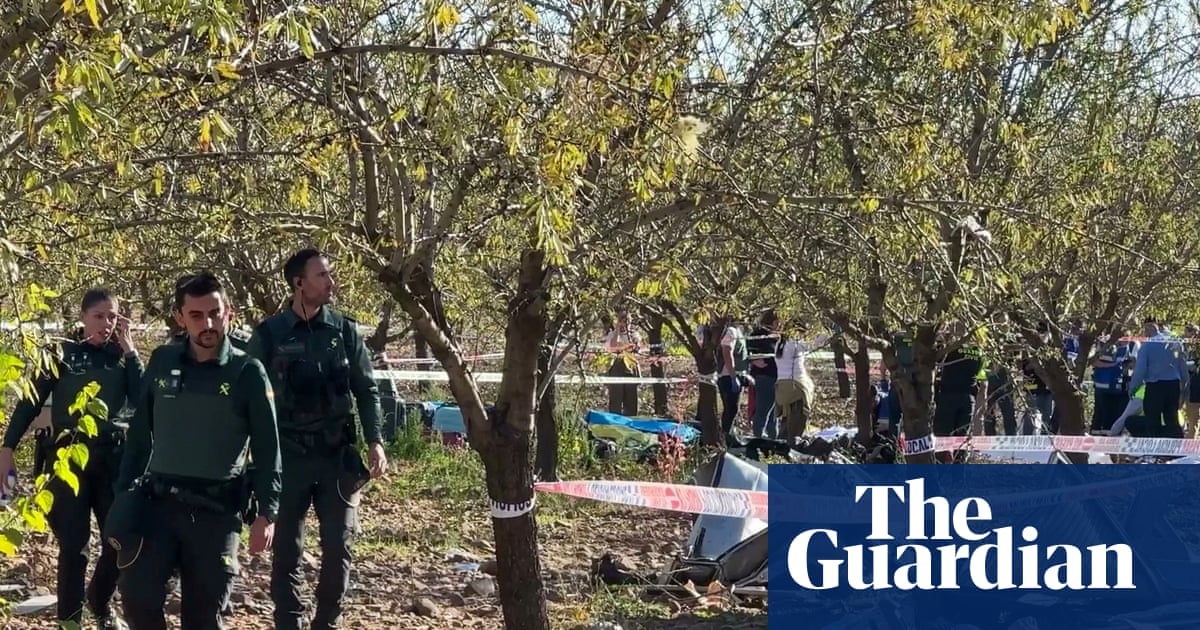
At least 69 people were killed and over 100 injured when a Renfe AVE high-speed train rear-ended a stationary Iryo train near Toledo on Wednesday morning after a signalling system failure. Leaked audio indicates the control centre cleared the Renfe train to proceed at normal speed despite the stalled train ahead, prompting an investigation into possible human error and technical failures. The disaster, Spain's worst rail crash since 2013, has intensified scrutiny of the country's high-speed rail safety and become a political flashpoint ahead of November elections.
-
Crash timeline and passenger numbers
The collision occurred at 08:53 local time on the high-speed line between Madrid and Seville, about 140km south of the capital. A computer failure at approximately 08:30 had halted six trains, including the two involved. The Renfe train was carrying 397 passengers, while the Iryo train had 146 passengers plus one baby. At least 69 people died, more than 100 were treated for injuries, and by the next day 50 remained hospitalized, 15 in critical condition. [2]
-
Audio reveals controller instructed normal speed despite stalled train
Leaked recordings between the control centre in Madrid and train drivers show that after the signalling failure, a controller told the Renfe driver to disconnect and reconnect the LZB speed-monitoring system and then 'proceed under Lateral Signalling Block, at normal speed with normal operation.' The driver questioned 'At normal speed?' and the controller confirmed. Standard procedure would have required the driver to proceed at a maximum of 40km/h under line of sight. In a separate exchange, the Iryo driver reported being stationary and unable to restart the train, meaning the controller was aware the track ahead was blocked. [1] [2] [4]
-
Victims include athlete and former minister; political leaders react
Among the dead were 24-year-old long jumper Julieta Gallego, who competed for Madrid club AD Sprint, and former employment minister Fátima Báñez, 59, who served under Prime Minister Mariano Rajoy from 2011 to 2018. A Civil Guard officer, José Manuel Chacón, 31, and tax lawyer Antonio Montero Domínguez were also killed. Prime Minister Pedro Sánchez said 'the whole of Spain is grieving' and vowed to determine if negligence occurred. Opposition leader Alberto Núñez Feijóo called for transparency, while far-right Vox leader Santiago Abascal rejected what he called attempts to 'use mourning to silence criticism' of rail infrastructure. Most parties suspended election campaigning for three days of national mourning. [2] [3]
-
Underlying safety concerns and prior incidents
The crash is the second rail disaster in Spain this year, following a head-on collision in Adamuz in January caused by a faulty rail section. Train drivers had already planned a strike to protest under-investment in the railway, which unions say directly affects safety. The CEO of Iryo recently told a senate inquiry that disconnection of the German-designed train control system was a 'frequent issue' on the line, and the system is being phased out. Transport Minister Óscar Puente called the control centre's decision to allow normal speed 'inexplicable'. [1] [2]